The Rise of AI in Healthcare: 2025 Overview & Key Trends
The year 2025 pushes AI in healthcare into its fastest adoption phase ever. Hospitals are shifting from pilot programs to full scale deployments, using AI powered diagnostics and digital health technologies to improve accuracy and speed. According to guidance from the World Health Organization WHO , responsible use of AI is now considered essential for future ready health systems.
This year also marks the rise of AI enabled health systems that constantly learn from real-time clinical data. With stronger predictive healthcare analytics, organizations are transforming patient journeys, reducing delays, and improving outcomes across entire populations.
2. How AI Is Transforming Diagnostics and Early Disease Detection
Modern diagnostic engines analyze patterns that humans often miss. For example, AI-powered diagnostics can now detect cardiac issues, pneumonia, and rare disorders within seconds, providing clinicians with reliable second opinions. Tools from Google AI healthcare solutions show significant progress in radiology and dermatology.
This shift means earlier disease detection, fewer false positives, and more personalized clinical pathways. With improved healthcare AI solutions, patients receive faster answers and doctors gain deeper insights.
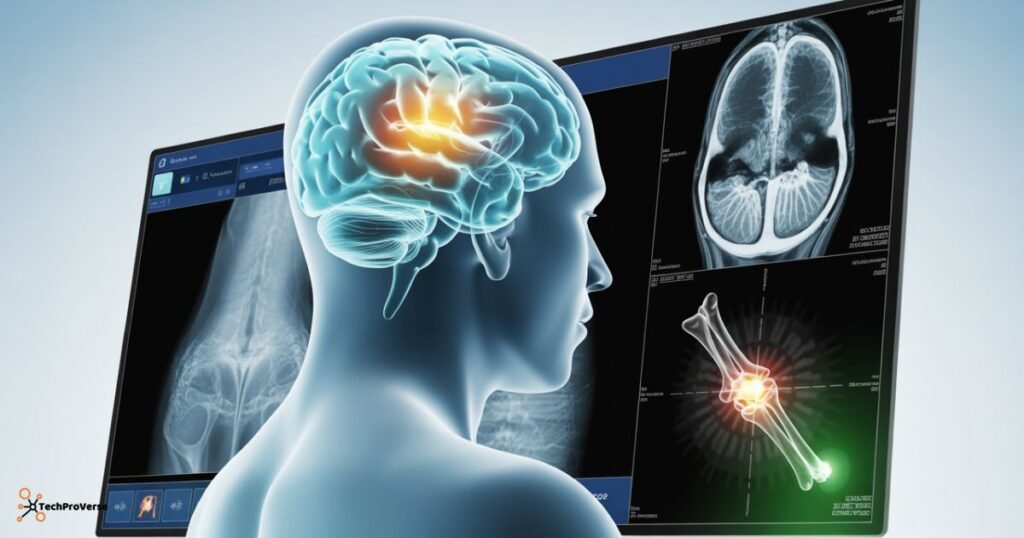
3. AI in Brain Scans, Imaging & Fracture Detection
AI models trained on massive datasets identify subtle patterns in MRI and CT scans. They excel in AI brain scan interpretation, allowing early recognition of epilepsy lesions, stroke risks, and tumors.
Emergency departments increasingly use AI bone fracture detection, ensuring no micro-fracture goes unnoticed. With smarter medical imaging AI, both imaging speed and precision have increased dramatically.
4. Using AI to Predict, Prevent, and Monitor Over 1,000 Diseases
Predictive engines now analyze lifestyle, genetics, lab results, and wearable data to forecast disease progression. These early disease prediction models can detect risks like COPD prediction with AI, kidney disease, and cardiovascular failure long before symptoms appear.
The power of predictive modeling lets doctors shift from reactive care to total prevention. Many hospitals connect these systems with digital patient monitoring tools to track real time vitals around the clock.
5. Clinical Chatbots and Virtual Assistants for Better Patient Decisions
Clinical chatbots powered by large language models (LLMs) now guide patients through symptoms, medication instructions, and appointment planning. Systems like Microsoft Dragon Copilot help clinicians with notes, while OpenAI Whisper improves speech to text accuracy in medical settings.
These assistants support smarter triage, reduce confusion, and allow underserved areas to access more reliable first line care.
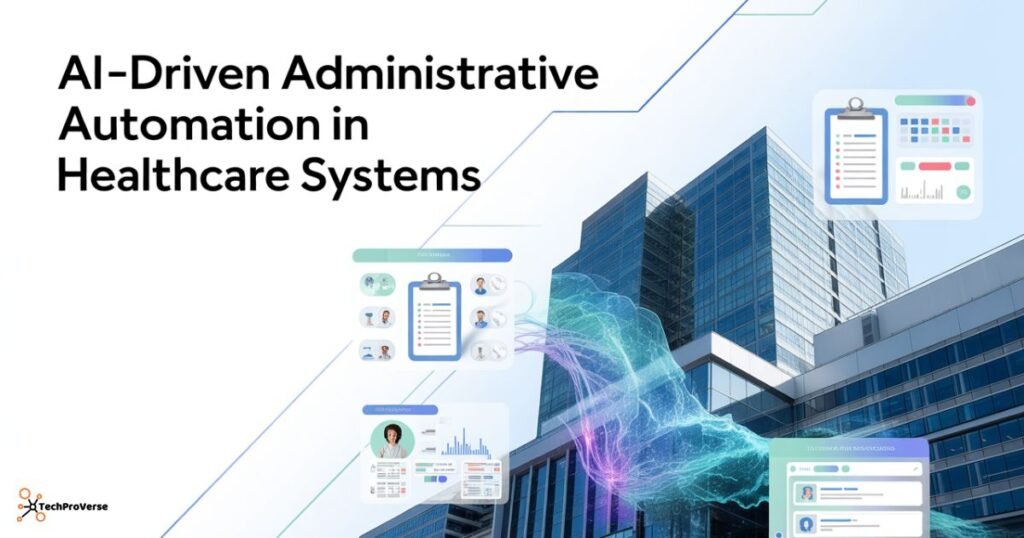
6. AI-Driven Administrative Automation in Healthcare Systems
Administrative burden often exhausts healthcare staff. With medical transcription AI, automated clinical documentation, and AI co-pilots for clinicians, hospitals save thousands of work hours.
Automated scheduling, billing, and triage support reduce burnout. Clinical decision support AI systems also help doctors make better and faster choices, especially in high pressure environments.
7. Trust, Ethics, and Patient Safety in AI-Powered Healthcare
As adoption grows, debates around algorithmic bias, transparency, and patient safety intensify. Regulatory bodies like FDA, NICE, and WHO push stronger standards for AI regulation in healthcare. Ethical AI frameworks provide guidance on fairness, auditability, and responsible deployments.
Safety rules now cover AI hallucinations in medical notes, data accuracy, and model explainability. These safeguards ensure humans remain in control of critical medical decisions.
8. Biometric Security & Facial Recognition Technology in Healthcare
Hospitals increasingly rely on biometric security and facial recognition technology to prevent unauthorized access. They’re especially useful for prescription control, fraud prevention, and secure check-ins.
With rising concerns about data sovereignty and Indigenous data protection, secure identity systems ensure patient data remains protected and accessible only to authorized professionals.
9. AI-Powered Robotics and LLM Integrated Smart Medical Devices
Surgical robots enhanced with LLM integration now guide procedures with unmatched precision. They offer real time feedback, reduce complications, and support surgeons during complex tasks.
Systems like Elea AI and next-gen robotic assistants help map organs, monitor vitals, and automate micro movements during operations. This is where robotics and machine learning in healthcare truly shine.
10. Personalized Healthcare: AI for Women’s Health & Chronic Disease Management
Women’s health receives major upgrades with advanced hormonal tracking, fertility prediction, and pregnancy monitoring tools. AI models detect early risks for PCOS, endometriosis, and gestational diabetes with higher accuracy.
Chronic disease patients rely on digital patient monitoring devices that track heart rate, glucose, blood pressure, and respiratory patterns. The result? More personalized, continuous care supported by AI.
11. Behavioral Health Transformation Through AI Navigation & Personalization
AI systems now analyze speech, sleep, typing patterns, activity, and mood to anticipate mental health shifts. These tools deliver personalized content, breathing exercises, medication reminders, and proactive alerts.
Behavioral AI helps clinicians understand stress, depression, and anxiety more deeply leading to better interventions and long term support.
12. Generative AI as a Growth Engine for Healthcare Organizations in 2025
Generative AI accelerates research, clinical documentation, and care planning. Companies like AstraZeneca, Huma, and Google Health lead in deploying LLM based medical data repositories and RAG clinical assistants.
These tools pull the latest medical research instantly, ensuring every decision is backed by updated evidence. They also streamline insurance claims, write summaries, and reduce manual workload.
13. Data-Driven Care Models: The New Learning Loop in Healthcare Innovation
Healthcare is shifting to a continuous learning model. Systems combine patient outcomes, monitoring data, and predictions to improve care delivery every month. This learning loop enhances clinical pathways and helps hospitals respond to emergencies with greater precision.
By merging retrieval augmented generation (RAG) with real-time analytics, organizations can refine treatments and improve decision making faster than ever before.
14. Future Outlook: How AI in Healthcare Will Evolve Beyond 2025
Beyond 2025, we’ll see deeper integration of modern AI with traditional medical systems like TCIM, Ayurgenomics, and medicinal plant identification AI. This creates a hybrid model where ancient wisdom meets cutting edge science.
By 2030, AI in healthcare will evolve into a fully interconnected ecosystem merging robotics, genomics, personalized medicine, and advanced diagnostics into one smart network.
Related Headings:
ChatGPT vs Google Gemini: Which AI Chatbot Will Win
Best Antivirus Software for PC
AI Tools for Small Business (2026 Guide)
AI Safety News 2025: Latest Updates, Risks, Regulations, and Global Developments
Top Free Deepfake AI Tools You Can Try Today
5 Best ChatGPT Alternatives
15 Best AI Tools for Marketing in 2026 (Boost Content, Ads & Sales)
Frequently Asked Questions.
Q 1: What is the future of AI in healthcare in 2025?
AI in 2025 will power predictive diagnostics, automation, and personalized care across hospitals. It will make healthcare faster, more accurate, and data-driven than ever before.
Q 2: What are the trends for AI 2025?
Key trends include generative AI, automation, robotics, and advanced predictive analytics. Industries will rely heavily on LLMs, RAG systems, and autonomous workflows.
Q 3: Is AI still booming in 2025?
Yes, AI remains in a massive growth phase with record adoption across healthcare, finance, and enterprise tech. Investment, research, and deployment continue rising globally.
Q 4: What is the future of AI in healthcare?
AI will deliver faster diagnoses, personalized treatments, and automated workflows. It will integrate with robotics, genomics, and virtual care to build smarter health ecosystems.
Q 5: What are three ways AI will change healthcare by 2030?
It will improve early disease prediction, automate surgeries with robotics, and enable fully personalized treatment plans. Healthcare systems will become more proactive and preventive.
Q 6: What is the biggest challenge of AI in healthcare?
The biggest challenge is ensuring data privacy, fairness, and eliminating algorithmic bias. Trust, regulation, and safe deployment remain top priorities.

Welcome to TechProVerse! I’m Abdullah, a WordPress and front-end developer, as well as an SEO researcher with 1.5 years of experience. I help websites get built, optimized, and rank higher on Google. Let’s achieve more together!