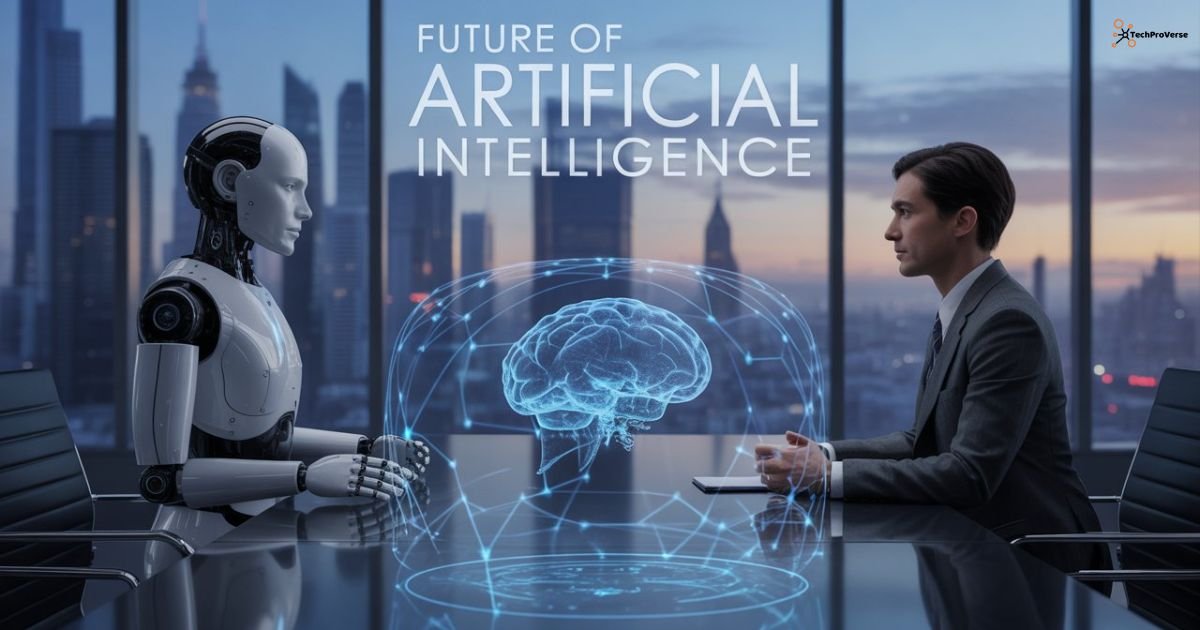
The ever-evolving digital-first world has made companies and individuals rely on intelligent systems to improve efficiency, decision-making, and innovation. The Future of Artificial Intelligence is no longer something that exists only in theory; it is already influencing the way we work, interact, and live. From intelligent assistants to predictive healthcare solutions, artificial intelligence is shaping modern life.
This guide is based on observations from enterprise AI adoption, cloud-based AI systems, and industry-wide trends across SaaS platforms, automation, and data-driven businesses. Whether you are just starting to learn about AI or are a professional seeking clarity on long-term impacts, this article explains the Future of Artificial Intelligence clearly and practically.
What Is Artificial Intelligence?
Artificial intelligence refers to computer systems designed to simulate human intelligence in order to perform tasks such as learning, problem-solving, decision-making, and reasoning. Modern AI systems operate using data models and intelligent algorithms.
The Future of Artificial Intelligence depends largely on how these systems continue to evolve and integrate into everyday human activities.
AI has advanced far beyond basic rule-based programming. Today’s systems can recognize patterns, make real-time predictions, and adapt to constantly changing environments, reshaping how we define intelligent technology.
Definition of Artificial Intelligence
Artificial Intelligence is the scientific and technical discipline focused on enabling machines to replicate aspects of human intelligence. These systems can learn from data, adapt over time, and solve complex problems.
It includes:
- Machine Learning
- Natural Language Processing
- Computer Vision
- Intelligent Automation Systems
Together, these technologies form the foundation of the Future of Artificial Intelligence.
Strong AI vs Weak AI
Weak AI
Weak AI is designed for specific tasks such as voice assistants, recommendation systems, and language translation. Most real-world AI applications today fall into this category.
Strong AI
Strong AI aims to replicate human-level reasoning, adaptability, and decision-making across multiple domains.
Currently, weak AI dominates practical use cases. However, experts believe the Future of Artificial Intelligence may gradually introduce more advanced systems capable of broader reasoning and multitasking.
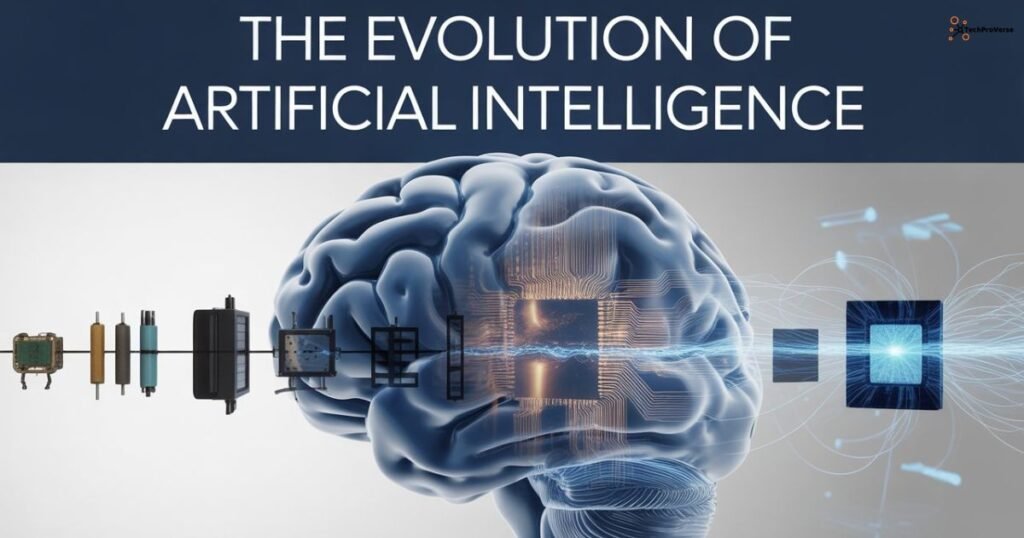
The Evolution of Artificial Intelligence
Artificial intelligence began in the 1950s with basic logical programs. Over time, it evolved into data-driven systems supporting healthcare, finance, communication, and automation.
From rule-based programming to deep learning, there has been a clear shift toward self-learning systems capable of handling complex, real-world decision-making.
Key Milestones in AI Development
- 1980s: Neural networks
- 2000s: Machine learning and big data
- 2020s: Large language models and generative AI
These milestones highlight how rapidly the Future of Artificial Intelligence is progressing.
Current State of AI Technology
Today, AI powers search engines, chatbots, medical imaging systems, fraud detection tools, and recommendation engines. In enterprise environments, AI improves efficiency, security, and customer experience.
In real-world implementations, many organizations have observed that AI-driven automation reduces manual workloads while improving accuracy, especially in data analysis and monitoring tasks.
How Artificial Intelligence Will Shape the Future
Artificial intelligence is expected to disrupt industries by automating repetitive tasks and enabling data-driven decision-making.
Businesses that adopt AI tend to innovate faster, respond more efficiently to market changes, and scale operations with fewer resources. This trend will remain central to discussions around the Future of Artificial Intelligence.
Automation and Business Transformation
- Smarter customer support
- Faster reporting and analytics
- Reduced operational errors
Faster Innovation Across Industries
AI accelerates experimentation, testing, and research in fields such as biotechnology, engineering, and robotics.
Future Applications of AI
The Future of Artificial Intelligence will expand across several advanced domains:
Autonomous Vehicles
AI systems analyze sensor data to navigate safely and reduce accidents.
Natural Language Processing
NLP enables real-time translation, intelligent chatbots, and conversational interfaces.
Robotics and Intelligent Automation
Robots will support manufacturing, healthcare services, and disaster response operations.
Cybersecurity and Fraud Detection
AI allows organizations to detect suspicious activity faster than traditional security methods.
The Impact of AI on Global Industries
Healthcare
AI supports diagnosis, predictive analytics, and treatment planning.
Education
Adaptive learning systems adjust content based on student performance.
Finance
AI improves fraud detection, trading strategies, and risk management.
Manufacturing
Predictive maintenance reduces downtime and improves efficiency.
Transportation
AI enhances route optimization, fleet management, and autonomous driving capabilities.
Economic Impact of Artificial Intelligence
AI will add trillions to the global economy by improving productivity, reducing inefficiencies, and enabling new markets. The Future of Artificial Intelligence will also reshape workforce needs.
Job creation vs job displacement
AI will automate repetitive tasks but create new roles in data science, cybersecurity, engineering, and automation management.
AI-driven business growth
Businesses using AI will scale faster through predictive analytics and automated insights.
Ethical and Societal Challenges
As AI adoption grows, ethical concerns become increasingly important.
Human Bias in AI
AI systems may inherit bias from training data, affecting hiring and decision-making processes.
Privacy and Data Security
AI relies on large datasets, raising concerns about data misuse.
Deepfakes and Misinformation
AI-generated media can spread misinformation if not properly regulated.
Strong governance frameworks are essential for a positive Future of Artificial Intelligence.

Risks and Dangers of Future AI
Rapid AI development introduces significant risks.
Loss of Control Over Advanced Systems
Highly autonomous systems may behave unpredictably if not properly managed.
Autonomous Weapons
AI-powered weapons raise serious ethical and global security concerns.
These risks emphasize the need for responsible AI development.
Global Regulations and AI Governance
Governments are introducing policies focused on:
- Privacy and data protection
- Transparency
- Algorithmic accountability
International standards aim to balance innovation with safety.
Will AI Replace Humans in the Future?
Artificial intelligence is unlikely to replace humans entirely. Instead, it will redefine roles.
Tasks AI Can Automate
- Data processing
- Repetitive administrative tasks
- Predictive analysis
Human Skills AI Cannot Replace
- Creativity
- Emotional intelligence
- Ethical judgment
- Leadership
The Future of Artificial Intelligence is about collaboration, not replacement.
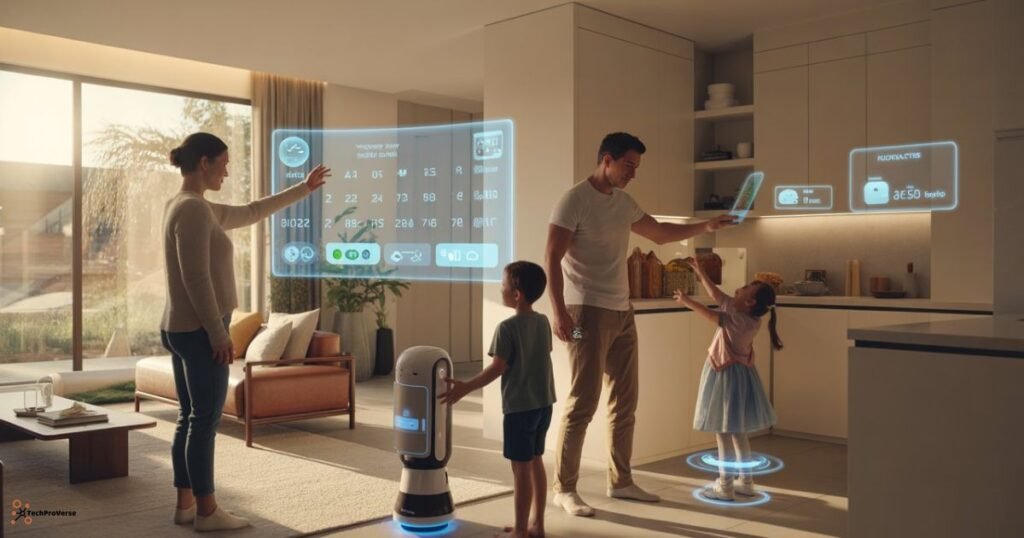
The Future of AI in Everyday Life
AI will continue improving daily life through intelligent systems and personalized experiences.
- Smart homes with automated controls
- Smarter voice assistants
- Personalized digital services
Predictions for the Next Two Decades
Experts anticipate:
- Autonomous transportation
- AI-driven healthcare
- Smart cities
- Rapid scientific breakthroughs
The Future of Artificial Intelligence will be defined by continuously learning systems that support and enhance human capabilities.
Conclusion:
The Future of Artificial Intelligence represents one of the most transformative periods in history. AI is not merely a technological upgrade it is a fundamental shift in how societies function and how people interact with technology.
Recommendation:
Adopt AI responsibly, invest in continuous learning, and focus on ethical use. Organizations and individuals who embrace artificial intelligence today will lead the digital world of tomorrow.
Related Headings:
How to Protect Your Data Online: Complete Guide for 2025
ChatGPT vs Google Gemini: Which AI Chatbot Will Win
ChatGPT vs Gemini: Ultimate 2025 AI Chatbot Comparison You Must See
Top Free Deepfake AI Tools You Can Try Today
AI Safety News 2025: Latest Updates, Risks, Regulations, and Global Developments
10 Latest AI Startup Funding News Today You Can’t Miss
AI Tools for Small Business (2026 Guide)
5 Best ChatGPT Alternatives
Frequently Asked Questions About the Future of AI
1. What does Elon Musk say about AI
Elon Musk warns that AI could become dangerous if not properly regulated and believes it may surpass human intelligence.
2. What is the future of AI after 5 years
AI will become more integrated into daily life with smarter automation, improved healthcare tools, and advanced personal assistants.
3. What jobs will AI replace by 2050
AI is expected to automate data entry, cashier roles, basic customer support, telemarketing, and routine administrative tasks.
4. What jobs will AI not replace
AI won’t replace roles requiring creativity, emotional intelligence, leadership, critical thinking and human interaction like therapists, writers, and managers.
5. What jobs make $3,000 a month without a degree
Freelancing, digital marketing, virtual assistance, delivery driving, sales, and entry-level tech support can easily reach $3,000 a month.
6. What is the 30% rule in AI
The 30% rule suggests that AI is most effective when it automates up to 30% of tasks, keeping humans responsible for the remaining decision-making.

Welcome to TechProVerse! I’m Abdullah, a WordPress and front-end developer, as well as an SEO researcher with 1.5 years of experience. I help websites get built, optimized, and rank higher on Google. Let’s achieve more together!