
In the increasingly interconnected digital ecosystem of today, organizations face an endless array of cyber threats, ranging from ransomware attacks and phishing scams to insider threats and data breaches. It is here that managed network security solutions become imperative. Organizations no longer need to understand or manage complex security solutions on their own.
This comprehensive resource will enable you to learn about managed network security services, their functioning, their importance, related technology, and techniques for selecting the best vendor, irrespective of your level of technical familiarity and expertise as a tech decision maker.
What is Managed Network Security?
A managed network security model is a service delivery system whereby a third-party company is responsible for monitoring and protecting your network from cyber threats. This approach is preferred by organizations that do not require dedicated in-house security specialists. Unlike traditional security models, this solution relies on outsourced security expertise.
You can think of it as employing professional security personnel for your digital office, always alert, continuously updated, and ready to act instantly.
What is a Managed Network Security Service?
Network security managed services involve a collection of cybersecurity solutions designed to safeguard both cloud-based and on-premises network infrastructure. These services are delivered by a managed security service provider (MSSP) and cover everything from firewall management services to near real-time threat detection and response.
Key Elements of Network Security Management
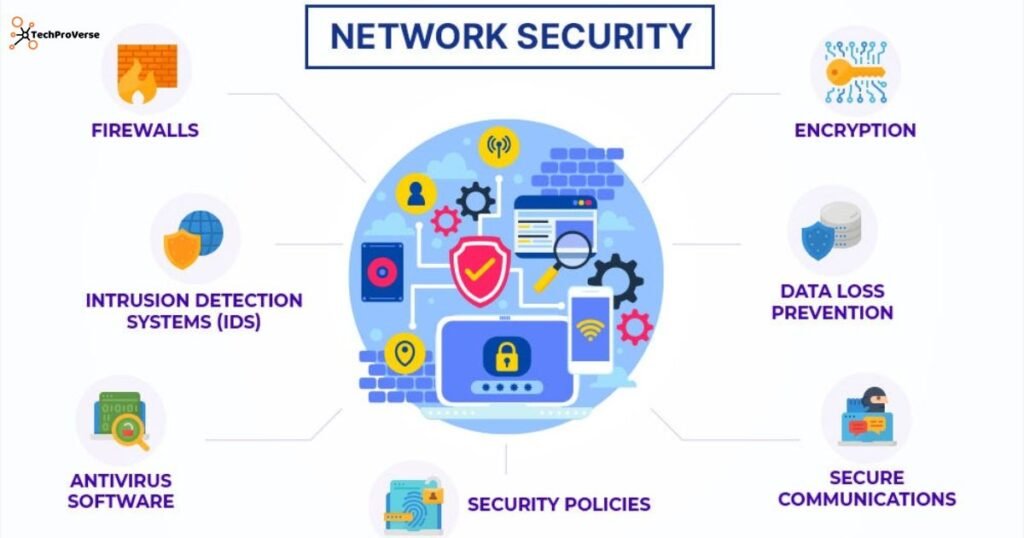
Managed Firewall Services
Firewalls serve as the first line of defense. Managed firewall solutions ensure next-generation firewall (NGFW) configurations are accurate, regularly patched, and continuously monitored to prevent unauthorized network access.
Intrusion Detection & Prevention Systems (IDS/IPS)
Intrusion detection and prevention systems (IDS/IPS) monitor network traffic in near real time for suspicious behavior. Proper IDS IPS management significantly reduces the risk of breaches before they escalate.
Unified Threat Management (UTM)
Unified threat management (UTM) combines firewall security, antivirus protection, intrusion prevention, and secure web filtering into a single platform, making it especially effective for small businesses.
Secure Web Gateway (SWG)
Secure web gateway management protects users from malicious websites, phishing attempts, and unsafe downloads while enforcing security policies.
Managed VPN & Secure Remote Access
Managed VPN services encrypt remote connections, ensuring secure access for employees working from home or other remote locations.
Antivirus & Anti-Malware Protection
This layer protects networks from malware, ransomware, and zero-day attacks using both signature-based detection and behavioral analysis.
Secure Access Service Edge (SASE)
Secure Access Service Edge (SASE) consolidates networking and security into a cloud-based solution that provides identity-based secure network access for modern cloud-first environments.
Managed SD-WAN Security
SD-WAN security management optimizes traffic across multiple locations while ensuring consistent security policies and continuous network traffic monitoring.
Managed Network Security: How It Works
24/7 Network Monitoring & Threat Detection
MSSPs operate a 24/7 security operations center (SOC) that performs real-time security monitoring, security log analysis, and network threat detection.
Incident Response & Threat Remediation
When threats are detected, specialists respond immediately, isolating compromised systems, blocking malicious IPs, and mitigating risks before escalation.
Security Policy Management & Updates
Providers handle security policy configuration and management, ensuring compliance-driven network security controls remain continuously updated.
Advantages of Managed Network Security Services
Data Leak Prevention
Continuous monitoring helps prevent data exfiltration and insider threats through advanced detection techniques.
Business Continuity & Uptime Protection
Proactive defense minimizes downtime caused by cyberattacks, ensuring uninterrupted business operations.
Compliance & Regulatory Support
Managed security services support compliance with ISO 27001, HIPAA, PCI-DSS, and GDPR through centralized reporting and audits.
Secure Remote & Hybrid Work Enablement
Employees receive secure access for remote and hybrid work without compromising network visibility.
Enhanced Customer & Partner Trust
Enterprise-grade network security strengthens trust among customers, partners, and stakeholders.
Cost Optimization & Predictable Security Spending
Outsourced network security services eliminate capital-intensive investments while offering predictable monthly costs.
Why Outsource Network Security to a Managed Service Provider?
Reduce Hardware & Operational Costs
Organizations avoid purchasing, managing, and upgrading expensive security hardware.
Access to Certified Security Experts
Gain access to professionals skilled in advanced cybersecurity solutions for enterprises.
24/7 Monitoring & Support
Unlike internal teams, MSSPs provide continuous network security monitoring.
Focus on Core Business Operations
IT teams can concentrate on innovation instead of constant incident response.
Scalable Security for Growing Businesses
Security scales effortlessly with business growth.
Managed Network Security vs Traditional IT Security
| Feature | In-House Security | Managed Network Security |
| Monitoring | Business hours only | 24/7 SOC monitoring |
| Expertise | Limited | Certified specialists |
| Cost | High fixed cost | Predictable monthly cost |
| Scalability | Limited | Highly scalable |
| Threat Response | Slower | Near real-time |
MSSP vs MSP – What’s the Difference?
- MSP (Managed Service Provider) focuses on IT operations.
- MSSP (Managed Security Service Provider) specializes in network security monitoring and analysis, threat intelligence, and incident response.
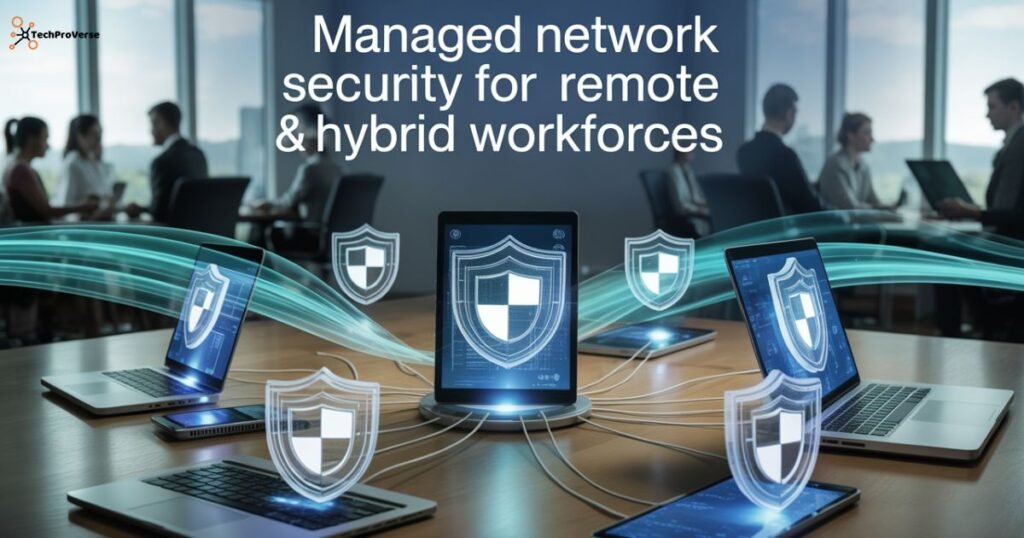
Managed Network Security for Remote & Hybrid Workforces
With employees working across different locations, network security managed services ensure:
- Secure VPN and identity-based access
- Real-time network visibility
- Protection of cloud-based and on-prem security infrastructure
Technologies Used in Managed Network Security
Fortinet Network Security Solutions
Known for NGFW products, UTM platforms, and integrated security frameworks.
Cisco Meraki Secure SD-WAN
Cloud-managed SD-WAN solutions with centralized security control.
VMware Security Solutions
Advanced micro-segmentation and workload protection capabilities.
Cato Networks
A cloud-native SASE platform combining networking and security.
Arista VeloCloud SD-WAN
Optimized application performance with built-in security.
How to Select the Best Managed Network Security Provider
Industry Experience & Certifications
Look for certifications such as CISSP, CEH, and ISO compliance.
Security Tools & Technology Stack
Ensure support for both cloud and on-premises network security.
Compliance & Reporting Capabilities
Detailed reporting is essential for regulated industries.
SLA, Support & Response Time
Strong SLAs and fast incident response are critical during security events.
Use Cases of Managed Network Security
Small & Medium Businesses (SMBs)
Enterprise-grade network protection without high cost.
Enterprises & Multi-Location Networks
Centralized security management across multiple branches.
Healthcare, Finance & Regulated Industries
Compliance-focused security with robust data protection controls.
Future of Managed Network Security
The future lies in AI-driven threat intelligence, zero-trust architectures, and cloud-native SASE models. As cyber threats grow more sophisticated, continuous network security operations are no longer optional.
Conclusion: Why Managed Network Security is Essential Today
Cyber threats are not slowing down, and businesses cannot afford weak defenses. Managed network security delivers expert protection, real-time monitoring, and scalable solutions tailored to modern business demands.
Recommendation: If your organization handles sensitive data, supports remote work, or lacks 24/7 security expertise, partnering with a trusted managed security service provider (MSSP) is now a necessity, not a luxury.
Related Headings:
How to Protect Your Data Online: Complete Guide for 2025
Zero-Day Vulnerability News 2025: Urgent Threats, Active Attacks & Patch Alerts
How to Detect Phishing Attacks
How to Protect Your Data Online: Complete Guide for 2025
Cloud Security Policy: How Organisations Should Handle It
Best Antivirus Software for PC 2025
Beginner’s Guide to Blue Team Cybersecurity
Frequently Asked Questions (FAQs)
What is managed network security?
Managed network security means letting a trusted security provider monitor, protect, and manage your network 24/7 so you don’t have to handle threats alone.
What is managing network security?
Managing network security is the process of protecting systems, data, and users by controlling access, monitoring traffic, and blocking cyber threats.
What is an MSP example?
An MSP example is a company that manages firewalls, antivirus, backups, and network monitoring for businesses, such as handling IT security for small offices.
What are the four types of network security?
The four main types are firewall security, access control, intrusion detection and prevention, and endpoint protection.
What are the 3 A’s of network security?
The 3 A’s are Authentication (who you are), Authorization (what you can access), and Accounting (tracking user activity).
What is a DMZ in network security?
A DMZ is a separate network area that hosts public-facing services, like websites, while keeping the internal network safely isolated.

Welcome to TechProVerse! I’m Abdullah, a WordPress and front-end developer, as well as an SEO researcher with 1.5 years of experience. I help websites get built, optimized, and rank higher on Google. Let’s achieve more together!