A bold shift is underway across American companies as the threat of cybersecurity attacks grows each year. Small businesses to hospitals, law firms, e-commerce stores, schools, and government agencies increasingly find a Managed Security Service Provider necessary as traditional protection no longer cuts it. Zero-Day Exploits, Ransomware, Phishing Attacks, Malware, Insider Threats, APTs, plus new automated attack tools all strike faster than ever. This creates an urgent need for strong Network Security, deep Threat Detection, and nonstop Security Monitoring through expert Cybersecurity Professionals who can deliver cybersecurity services, Threat prevention services, Cybersecurity monitoring services, IT infrastructure security, and Business continuity security around the clock.
Today’s American organizations want managed security solutions, Outsourced cybersecurity, and Cybersecurity as a service because they reduce operational stress and remove the need to hire large in-house security teams. They also provide Automated threat detection, MDR provider support, EDR tools, managed firewall solutions, Intrusion prevention systems (IPS/IDPS), Secure VPN management, Access Control, Virus detection services, Cyber threat analytics, Security event tracking, SOC-as-a-Service, and Digital risk protection from a highly experienced Security Operations Center (SOC). This guide explores everything American businesses need to know about MSSPs in 2025.
What Is an MSSP (Managed Security Service Provider)?
A Managed Security Service Provider is a third-party security provider that offers ongoing Cybersecurity, Threat Detection, Security Event Monitoring, and Incident Response. It manages IT Infrastructure, defends networks, and monitors for attacks through advanced Security Automation, AI-Powered SOC, and real-time Proactive Threat Hunting. In simple terms, an MSSP becomes a company’s external security department, offering Enterprise security services, Cyber risk management, and Security strategy optimization to keep operations safe. Many U.S. organizations choose MSSPs because they offer Cost-effective cybersecurity and deep Regulatory Compliance support, including GDPR, HIPAA, and PCI DSS.
MSSP Definition and Core Responsibilities
An MSSP handles everything from Intrusion Detection and Firewall Management to Threat Intelligence, Vulnerability Management, and Incident Remediation. These services often include Network Traffic Analysis, Security Alerts, Security Parameters design, Attack mitigation tools, Security tool fragmentation reduction, and Unified security platforms like Fortinet MSSP platform. Real-world examples could include catching a ransomware attack before it spreads, blocking malicious VPN traffic, stopping internal misuse, or preventing data theft in hospitals and financial companies.
Importance of MSSPs in the Contemporary Cyber Threat Landscape
The U.S. Threat Landscape is growing rapidly; the usage of automation, AI-powered malware, and multi-stage attacks coordinated together by cybercriminals demands a much more aggressive defense of the Attack Surface for companies of any size. An MSSP improves a company’s Security Posture by offering Security Operations Center (SOC) coverage, Security Reports and Audits, Subscription-Based Security, Scalable Security Solutions, and rapid Remediation Time. These capabilities help American businesses stay safe in a world where one wrong click can trigger a devastating Data Breach.
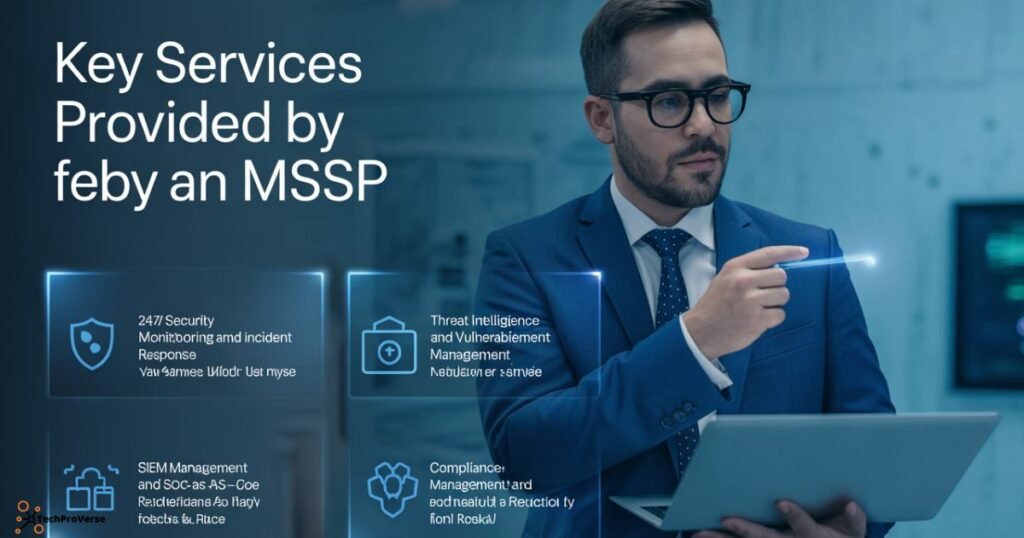
Key Services Provided by an MSSP
Modern MSSPs deliver a full suite of Managed Services that protect every layer of a company’s digital environment. These include IT operations support, Network protection solutions, Cloud-based security solutions, and subscription-based IT security designs for modern hybrid infrastructures. These services act as a protective shield for businesses that cannot handle cybersecurity alone.
24/7 Security Monitoring and Incident Response
An MSSP provides nonstop Security Monitoring and handles Incident Response using Threat Hunting, EDR tools, MDR provider operations, and automated response playbooks. Many American companies don’t have internal staff available all night, but an MSSP uses a 24/7 SOC Coverage model to stop attacks even at 3 AM. This constant surveillance dramatically reduces Alert Fatigue and improves security precision.
Threat Intelligence and Vulnerability Management
MSSPs use global Threat Intelligence networks to study attack patterns and predict what hackers will do next. With continuous Vulnerability Assessments, Cyber threat analytics, and patching support, an MSSP prevents criminals from exploiting weak points. This also includes zero-day monitoring, virus scanning, and deep OS-level inspection to catch hidden threats.
SIEM Management and SOC-as-a-Service
The heart of many MSSPs is their Security Operations Center (SOC) equipped with powerful SIEM tools that track logs, analyze anomalies, and deliver fast alerts. When businesses use SOC-as-a-Service, they gain a fully managed SOC without building one internally. This improves visibility and reduces internal costs dramatically.
Compliance Management and Reduction of Risk
American industries have strict laws. Managed Security Service Provider provides compliance related to HIPAA, GDPR, PCI DSS, and all other U.S. regulations. Their tools facilitate audit trails, security logs, encryption controls, and highly detailed compliance reports that minimize legal penalties and prevent operational shutdowns for poor security policies.
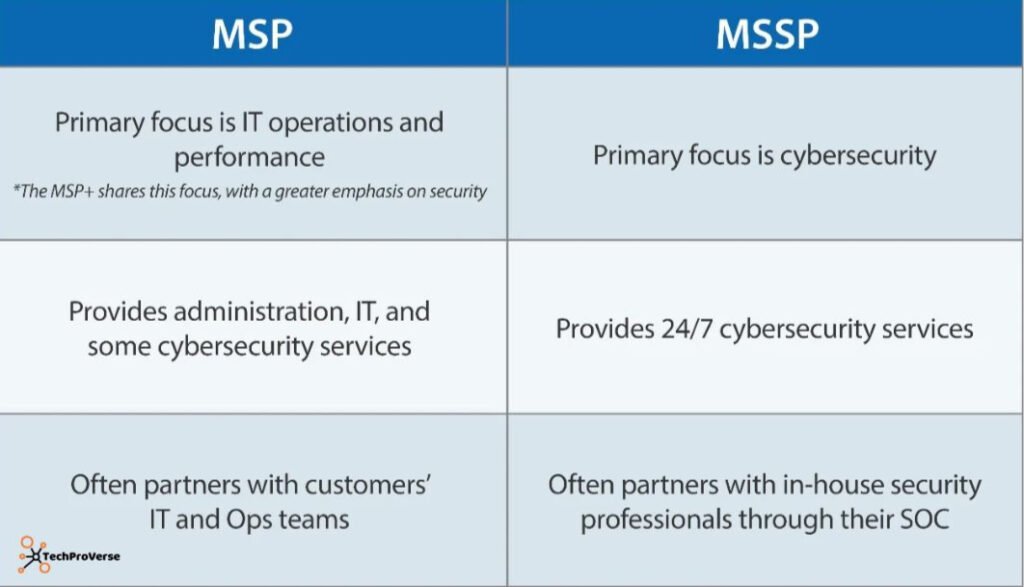
MSSP vs MSP: What’s the difference?
Even though the abbreviations sound similar, a Managed Security Service Provider and an MSP are for different purposes. The MSP will cater to IT operations, device management, system updates, and performance support. Meanwhile, MSSP focuses fully on Cybersecurity, Threat Detection, Incident Response, and high-risk protection services.
Security-Focused vs Operations-Focused Models
While the MSP ensures smooth workflows, an MSSP handles Cyber defense services on a full scale, including the service of Threat Prevention, Intrusion Detection, Risk Reduction, Security Compliance Support, and Security Strategy Optimization. MSPs maintain systems, whereas MSSPs defend them.
Exclusive Tools and Technologies Used by MSSPs
The dependence of MSSPs will be related to more sophisticated tools, such as EDR, MDR, IPS/IDPS, SOAR, AI-Powered SOC, Secure VPN Management, and Automated Threat Detection platforms. These tools are more advanced than the typical MSP toolkit and require skilled analysts to manage effectively.
Why MSSPs are crucial for robust cyber defense.
With growing cyberattacks aimed at small and medium businesses, America is in a surge. Managed Security Service Provider strengthens defenses by offering Unified Security Platforms, Security Fabric Integration, stronger scalability of IT security, and reliable Managed Security Solutions that ensure organizations remain resilient against ransomware and other evolving threats.
Top Managed Security Service Providers (Best MSSPs 2025)
Some MSSPs have proven excellence in U.S. markets.
| Provider | Key Strengths | Example Use Case |
| IBM Security | AI-powered SOC, analytics | Prevents large-scale ransomware attacks |
| Secureworks | Threat intelligence, SOC support | Detects phishing campaigns in real-time |
| AT&T Cybersecurity | Managed firewall, AlienVault | Protects enterprise networks from malware |
| Trustwave | Compliance, vulnerability management | Helps banks meet PCI DSS requirements |
| Forescout (SecureLink) | Device visibility, access control | Secures hospital endpoint networks |
| Verizon MSS | SOC coverage, incident response | Monitors nationwide retail chains |
| BT Cybersecurity | Cloud-native SOC, analytics | Supports multi-cloud U.S. enterprises |
| ATOS | Zero-trust security, compliance | Provides hybrid cloud protection |
| NTT Security | Distributed SOC, analytics | Rapid incident containment for large businesses |
IBM Security
IBM provides large-scale Cybersecurity, analytics, and threat intelligence from global SOCs. Their toolset includes advanced AI engines and deep forensic capabilities used by Fortune 500 organizations.
Secureworks
Secureworks is known for strong Threat Detection, global Threat Intelligence, and one of the fastest incident response teams in the U.S. market.
AT&T Cybersecurity
AT&T offers Network Security and Managed Firewall Solutions backed by their AlienVault technology and cloud-native SIEM.
Trustwave
Trustwave specializes in Vulnerability Management, compliance, and advanced detection systems for banking and healthcare organizations.
Forescout (SecureLink)
Forescout focuses heavily on identity, access management, and endpoint-level defense, offering strong device visibility across enterprise environments.
Verizon Managed Security Services
Verizon delivers enterprise-grade Cybersecurity Monitoring Services, SOC support, and large-scale attack mitigation for nationwide operations.
BT Cybersecurity
BT provides powerful cloud-native defense systems and global monitoring centers that support U.S. organizations.
ATOS
ATOS delivers strong European security engineering, U.S. compliance support, and large analytics-driven security platforms.
NTT Security
NTT offers large distributed SOCs, advanced analytics, and a strong focus on incident remediation for large enterprises.
Business Benefits from Using an MSSP
U.S. companies move to Managed Security Service Provider because they want stronger protection, less operational overhead, and Scalable Security Solutions that grow with their needs. By leveraging Outsourced cybersecurity, Cyber defense services, and IT security outsourcing, businesses gain continuous Security Monitoring, Threat Detection, and Incident Response without hiring large internal teams.
Reduced Operational and Security Costs
An MSSP removes the need for costly in-house teams, specialized security tools, and 24/7 staffing. This approach provides Cost-effective cybersecurity while maintaining robust IT Infrastructure Security and managed firewall solutions. Companies can save significantly while ensuring comprehensive protection.
Experienced Cybersecurity Experts, Accessible
MSSPs provide instant access to certified analysts, Threat Hunting experts, forensic specialists, and compliance professionals. These Cybersecurity Professionals guide organizations with hands-on strategies for Risk Reduction, Security Automation, and Digital Risk Protection.
Faster Threat Detection and Response
With advanced Security Monitoring, Automated Threat Detection, and rapid Incident Remediation units, MSSPs shorten attack response time. Businesses benefit from quicker containment of Malware, Ransomware, or Phishing Attacks, minimizing operational disruption.
Scalable and Flexible Security Infrastructure
American companies can expand or reduce services as required. Cloud-based security solutions, Subscription-Based Security, and SOC-as-a-Service provide flexible coverage and IT security scalability, ensuring that growing organizations remain fully protected.
Common Challenges When Working with MSSPs
While MSSPs offer many benefits, businesses face some challenges when outsourcing security.
Data Privacy and Third-Party Risks
Sharing sensitive data with a Third-party security provider introduces risk. Strong MSSPs enforce Access Control, encryption, and strict Security Compliance Support to protect client information.
Integration Issues with Existing Systems
Older IT systems often encounter Security Integration Challenges. Managed Security Service Provider works to integrate Unified security platforms with legacy infrastructure while maintaining Network protection solutions.
Ensuring Transparency and Detailed Reporting
Some companies experience unclear reports or delayed Security Reports and Audits. Leading MSSPs provide simple dashboards, Security Event Monitoring, timelines, and audit-ready evidence for compliance and operational clarity.
How to Find the Right MSSP That Fits Your Organization
Selecting the right Managed Security Service Provider (MSSP) requires evaluating quality, experience, compliance capabilities, and SOC Coverage.
Features and Functionalities to Look For
Businesses should consider advanced EDR tools, Managed Detection and Response (MDR) capabilities, cloud support, 24/7 Security Operations Center (SOC) monitoring, and complete coverage of their Attack Surface.
Certifications and Compliance Standards
Top Managed Security Service Providers maintain certifications like ISO 27001 and provide support for HIPAA, PCI DSS, GDPR, and U.S. state-level privacy requirements. This ensures Regulatory Compliance and reduces operational risks.
Service Level Agreement (SLA) and Reporting Quality
A strong SLA defines response times, Incident Remediation, monitoring scope, and escalation procedures. Transparent Security Alerts and Security Event Monitoring ensure businesses are informed at every step.
Pricing Models and Cost Evaluation
Most MSSPs offer Subscription-Based Security or per-device pricing. Companies should select the model that aligns with their IT Infrastructure Security and operational needs.
The Future of MSSPs: Trends and Innovations in Security
The U.S. Threat Landscape is constantly evolving, and MSSPs are adopting innovative technologies to stay ahead.
AI-Driven Threat Detection and Automation
AI enhances early Threat Detection with Automated Threat Detection, behavioral analytics, and predictive modeling. AI-Powered SOCs allow faster Incident Response and improved Cybersecurity monitoring services.
Adoption of Zero-Trust Security Models
Businesses move from perimeter-based security to identity-first models, implementing strict continuous verification for Access Control and Attack Surface protection.
Cloud-Native Managed Security Operations
Cloud SOCs provide IT security scalability, better analytics, and lower costs for hybrid, remote, and multi-cloud deployments. Cloud-based security solutions allow Security fabric integration and more robust Network protection solutions.
Conclusion:
The role of a Managed Security Service Provider (MSSP) is crucial for U.S. organizations facing Cybercriminals, Ransomware, Malware, and Zero-Day Exploits. Equipped with Threat Intelligence, Security Monitoring, Incident Remediation, and compliance support, MSSPs ensure operational safety and long-term Risk Reduction. By selecting the right provider, American businesses strengthen their Security Posture, reduce threats, and secure a foundation for future growth.
Related Headings:
How to Protect Your Data Online: Complete Guide for 2025
Zero-Day Vulnerability News 2025: Urgent Threats, Active Attacks & Patch Alerts
How to Detect Phishing Attacks
Managed Network Security Services | Complete Guide for Modern Businesses
How to Protect Your Data Online: Complete Guide for 2025
5 Best ChatGPT Alternatives
Best Antivirus Software for PC 2025
Beginner’s Guide to Blue Team Cybersecurity
Frequently Asked Questions (FAQs) About MSSPs
1. What does MSSP stand for?
MSSP stands for Managed Security Service Provider, a company that handles cybersecurity, threat detection, and incident response for businesses.
2. What questions should I ask an MSSP?
Ask about their SOC coverage, Incident Response process, compliance expertise, pricing model, and real-world threat handling experience.
3. Is an MSSP better than hiring a cybersecurity team?
For most companies, a Managed Security Service Provider is faster, more cost-effective, and offers 24/7 Security Monitoring, Threat Hunting, and access to expert analysts without full-time staffing.
4. What are the disadvantages of MSSPs?
Outsourcing may bring Third-party security risks, integration challenges with legacy systems, and require careful review of SLA transparency.
5. Is MSSP worth IT investment?
Yes, because it provides Scalable Security Solutions, Cyber risk reduction, and continuous Network protection at a fraction of the cost of building an internal SOC.

Welcome to TechProVerse! I’m Abdullah, a WordPress and front-end developer, as well as an SEO researcher with 1.5 years of experience. I help websites get built, optimized, and rank higher on Google. Let’s achieve more together!